
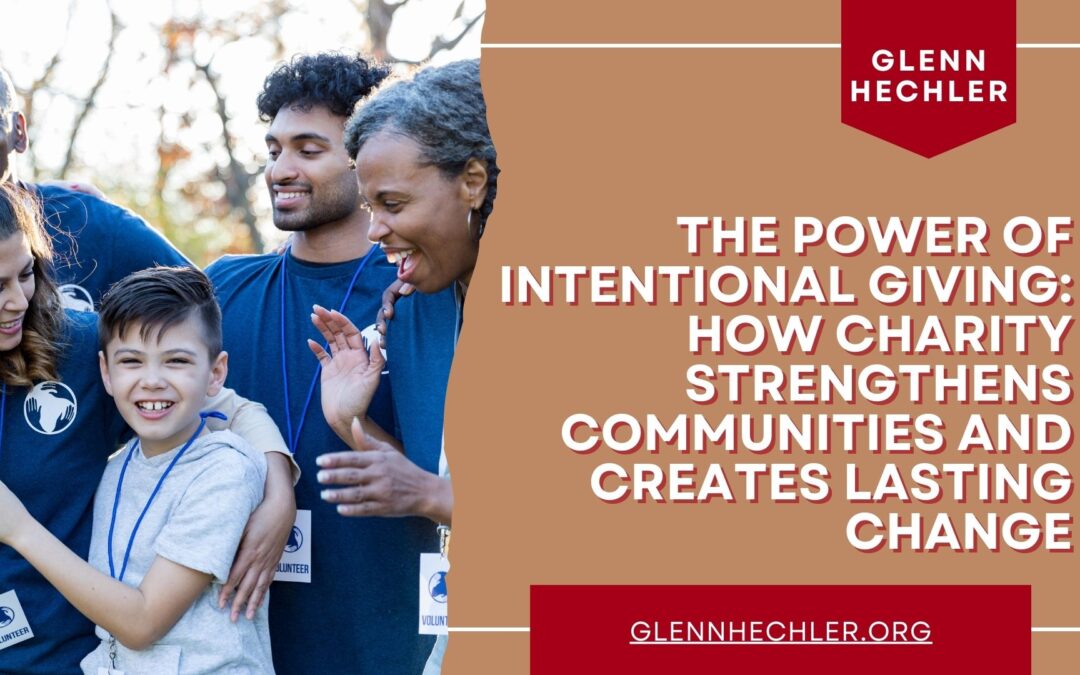
Charity is often viewed as an act of kindness — a donation here, a fundraiser there. But intentional giving is far more powerful than occasional generosity. When approached strategically and consistently, charity becomes a catalyst for sustainable change.
Communities don’t thrive by accident. They flourish when individuals, families, and businesses choose to invest in their well-being.
Understanding the Difference Between Charity and Impact
Traditional charity often focuses on immediate relief — providing food, clothing, or emergency financial assistance. These efforts are essential. They meet urgent needs and offer critical support during crises.
However, intentional giving goes a step further. It looks beyond immediate relief and asks: How can we create long-term solutions?
For example, donating to a food pantry addresses hunger today. Supporting workforce training programs addresses income inequality tomorrow. Funding educational initiatives creates opportunities that ripple across generations.
Both forms of giving matter. But combining short-term relief with long-term investment maximizes impact.
The Ripple Effect of Giving
When you give, you rarely see the full ripple effect of your contribution.
A scholarship might allow a student to attend college. That student graduates, builds a career, purchases a home, supports local businesses, and mentors others. One act of giving multiplies into decades of community contribution.
Similarly, supporting affordable housing initiatives strengthens neighborhoods. Stable housing reduces crime rates, improves educational outcomes, and increases economic participation. The benefits extend far beyond the initial recipient.
Giving is not subtraction — it is multiplication.
Local Giving Creates Personal Connection
While global causes are important, local giving often creates the strongest connection. Supporting neighborhood schools, shelters, housing organizations, and community centers allows donors to witness impact firsthand.
Attending events, meeting the families served, and volunteering time deepens the meaning behind the donation. It transforms charity from an obligation into a relationship.
Local giving also fosters accountability. You see the programs in action. You understand the needs more clearly. And you can adapt your contributions to address evolving challenges.
Creating a Culture of Generosity
Charity doesn’t have to be an individual act — it can be cultural. Families can establish traditions of annual giving. Businesses can allocate a percentage of profits to community initiatives. Teams can volunteer together.
When generosity becomes embedded in culture, it shifts mindset. Children grow up understanding the importance of contribution. Employees feel connected to a greater purpose. Communities feel supported rather than overlooked.
Even small, consistent actions build momentum. A monthly donation of modest size often has more impact than a one-time large gift because it provides nonprofits with predictable resources to plan and grow.
Giving Beyond Money
Charity is not limited to financial contributions. Time, expertise, and advocacy are equally powerful.
- Offering financial literacy workshops
- Providing mentorship to aspiring entrepreneurs
- Assisting families navigating housing processes
- Serving on nonprofit boards
- Connecting organizations to valuable networks
These forms of giving create empowerment, not dependency.
The Fulfillment Factor
Research consistently shows that giving improves mental well-being. It fosters gratitude, connection, and purpose. In a fast-paced professional world, charity grounds us. It reminds us that we are part of something bigger than our individual ambitions.
Intentional giving also reshapes how we define success. Instead of asking, “What did I earn?” we begin asking, “What did I contribute?”
That shift changes everything.
Building a Future Worth Living In
Communities don’t change overnight. But consistent, thoughtful charity builds foundations for stronger futures.
When we choose to give intentionally — with strategy, heart, and commitment — we don’t just respond to problems. We participate in solutions.
And ultimately, the greatest return on investment isn’t financial.
It’s the knowledge that because you chose to give, someone else had the opportunity to thrive.